Where Does Tokyo Revengers Take Place in Real Life?
Location Guide · 5 min read
Published July 16, 2026 · Updated August 22, 2026
Tokyo Revengers takes place in Tokyo, Japan. Ken Wakui's story follows Takemichi Hanagaki as he leaps twelve years back in time, so the series shows two versions of the same city: the mid-2000s Tokyo where the Tokyo Manji Gang rises, and the present-day Tokyo where its consequences play out. Almost every arc is drawn from real, visitable places in and around the capital — which makes Tokyo Revengers one of the most accessible anime pilgrimages you can do.
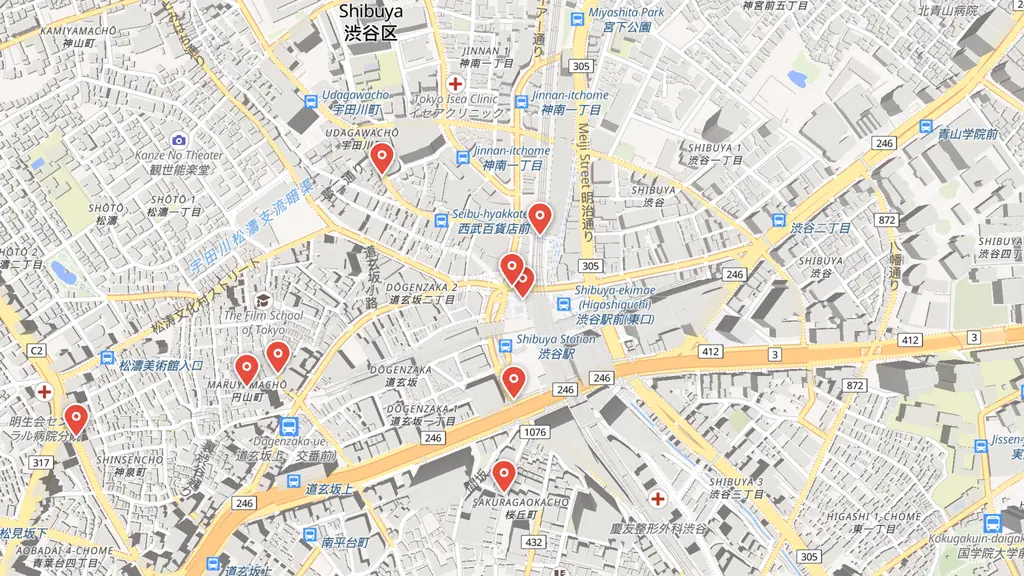
The real neighborhoods behind Tokyo Revengers
Shibuya
Shibuya anchors the present-day timeline. The Shibuya Scramble Crossing in front of Shibuya Station — the busiest pedestrian crossing in the world — appears when the story returns to the modern day, and the streets fanning out from the station backdrop many of Takemichi's lowest moments. Shibuya is on the JR Yamanote Line, so it slots into any Tokyo itinerary without a detour.
Fans have also matched quieter scenes to the area, including the footbridge where Takemichi and Chifuyu corner Baji for one of the series' pivotal conversations.
The Toman meeting shrine
The Tokyo Manji Gang assembles at Musashi Shrine, the torii-framed grounds where Mikey addresses the gang before every major conflict. The shrine's name is fictional, but the real model is Numabukuro Hikawa Shrine in Nakano — a roughly 800-year-old neighborhood shrine that now sells official Tokyo Revengers collaboration goshuin. We cover the scenes, the real shrine, and how to visit in our dedicated Musashi Shrine real-location guide. Its lantern-lit grounds feel worlds away from Shibuya's noise — a reminder that most of Tokyo Revengers happens not in landmark Tokyo but in its residential backstreets.
Riversides and suburbs
The 2005 timeline lives in Tokyo's suburbs: school routes, arcades, and the wide grassy banks of the Tama River, the classic Kanto backdrop for after-school fights and heart-to-hearts. The Tama River forms Tokyo's southwestern edge, and its levee paths are open to anyone — stand on the bank at sunset and you are inside the show's color palette.
When is Tokyo Revengers set?
Tokyo Revengers is set in two years twelve years apart: 2005 and 2017. The story opens in 2017, where a 26-year-old Takemichi is scraping by as a part-timer, and his time leap drops him into 2005 as a middle schooler — the year the Tokyo Manji Gang is founded. The series then cuts between the two, because every change Takemichi makes in 2005 rewrites the present he returns to. Later arcs push the present-day thread past 2017 as those timelines shift, but 2005 stays the anchor year for everything involving Toman's founding.
That gap is why the pilgrimage has two moods. The 2005 scenes are suburban — school routes, riverbanks, a neighborhood shrine — while the 2017 scenes are drawn from central Tokyo. The real places are the same today; only the story's clock moves.
Where does Takemichi live?
The series never gives Takemichi a real address, and his apartment is not a findable location. What is real is the geography around him: the 2017 thread places him in ordinary working-class Tokyo, and the 2005 thread moves through the western suburbs where Toman forms — the shrine at Numabukuro, the school routes, and the Tama River banks. If you want to stand in Takemichi's world rather than outside his door, those suburban locations are the ones to visit; the Tokyo Revengers locations page marks each with its episode.
The same goes for the other members' homes and Toman's hideouts — Ken Wakui draws real neighborhoods but invents the buildings inside them. Treat any "Takemichi's house" pin you find online with suspicion, and never go looking for one in a residential street.
Can you see Tokyo Revengers in real life?
Yes — and unlike rural anime pilgrimages, you can cover the core Tokyo Revengers spots in a single day using nothing but the JR Yamanote Line and a Suica card. The locations are ordinary public places: a crossing, shrines, riverbanks. The usual pilgrimage etiquette applies double here, because several scenes map to residential neighborhoods — keep voices down, don't photograph locals or private homes, and treat shrine grounds as active places of worship, not film sets.
Anime Itinerary tracks every verified Tokyo Revengers location with the exact episode and scene each one appears in, plotted on an interactive map. Start with the Tokyo Revengers real-life locations page, or browse the full map of anime locations across Japan.
Plan a Tokyo Revengers day route
The efficient order is to group locations by train line rather than by arc: Shibuya's spots cluster within walking distance of the station, while the suburban shrine and riverside scenes sit along commuter lines heading west. Save the locations you want, then build a day-by-day route that strings them together with real walking and transit connections.
If you're new to location-hunting, read our primer on what anime pilgrimage (seichi junrei) is first — it covers how locations get verified and how to visit them respectfully.
Which studio animates Tokyo Revengers?
The Tokyo Revengers anime is animated by LIDENFILMS, the Tokyo-based studio that has produced all three seasons: the 2021 first season, the Christmas Showdown arc, and the Tenjiku arc. The studio's backgrounds are a large part of why the pilgrimage works so well — its renditions of Shibuya's streets and the suburban riversides are close enough to the real places that frame-matching your own photos is easy. The manga is by Ken Wakui, serialized in Weekly Shonen Magazine.